
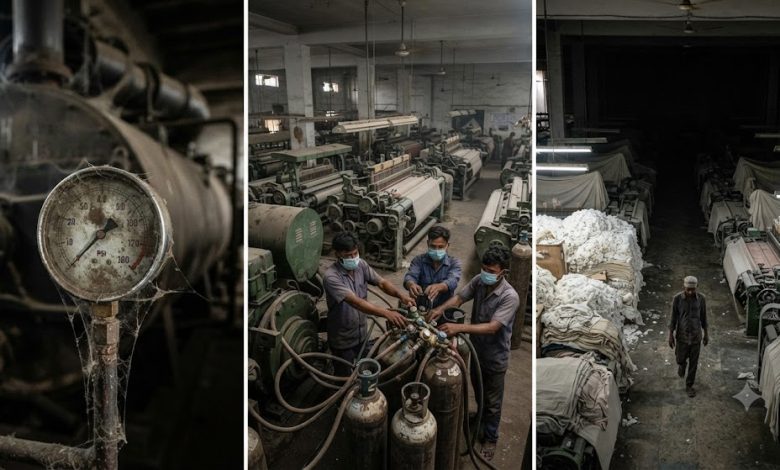
Introduction: The industrial sector in Bangladesh is facing a severe energy crisis. While industrial machinery, such as gas engines and boilers, typically requires a pressure of 8–10 PSI (pounds per square inch) for reliable operation, many factories are currently receiving as little as 1–1.5 PSI. This critical drop in gas pressure has crippled production across various sectors, leading to widespread closures and threatening the survival of industries, particularly in the textile sector. Manufacturers are now calling for a consistent and adequate supply of gas rather than subsidies.
Severe Pressure Deficit and Operational Collapse
A minimum pressure of 8 PSI is essential for industrial engines and boilers to function. When pressure falls below 7–8 PSI, efficiency drops sharply, and once it hits the 1–5 PSI range, production becomes nearly impossible. Currently, many factories receive less than 1 PSI during the day, forcing them to rely on costly CNG or LPG alternatives, which significantly inflates production costs and renders operations unsustainable.
Devastation in the Textile Sector
The textile industry is the worst hit by this crisis. According to the Bangladesh Textile Mills Association, 234 textile mills have shut down since 2014. Facing mounting losses and energy uncertainty, many entrepreneurs are now considering closing their businesses or selling their factories altogether.
Impact Across Other Industries
The energy crisis extends beyond textiles, severely affecting other key sectors:
-
Ceramics: Daily gas pressure often drops below 1 PSI, making it difficult to maintain continuous production.
-
Tyre Manufacturing: This sector requires a stable, round-the-clock energy supply, which is currently unavailable, disrupting critical manufacturing processes.
-
Footwear: Manufacturers are struggling with erratic power supply and frequent voltage fluctuations, which cause significant damage to sensitive machinery.
Titas Gas Supply Constraints
Titas Gas data confirms that declining domestic production and shortages in LNG imports have led to a substantial reduction in gas supply to industrial consumers and captive power plants over the past few years. Despite repeated appeals from entrepreneurs to the authorities, the situation remains unresolved.
Industry Demands
Entrepreneurs argue that the impact of global energy price volatility and domestic shortages has reached a breaking point. They emphasize a clear stance: “We are not asking for subsidies; we are asking for adequate gas pressure so that we can utilize the fuel we are already paying for and sustain our operations.”