
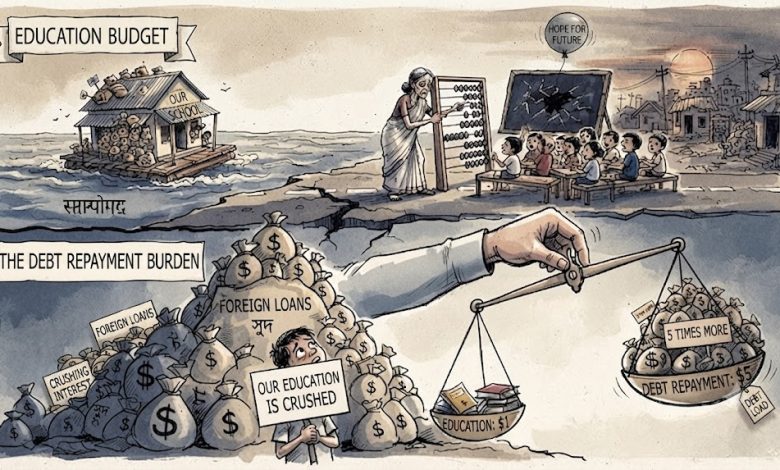
The majority of developing countries spent more on servicing foreign debt than on education last year, according to a recent United Nations report. The findings warn that international aid for education globally could decrease by up to 30% by 2027.
This report was featured in The Guardian. This information highlights a critical shift in how resources are allocated in developing nations.
Key Findings and StatisticsAccording to a report published by UNESCO, the UN’s educational, scientific, and cultural agency, 113 developing countries spent more on foreign debt installments and interest payments in 2025 than on their education sectors.
In sub-Saharan African countries, spending on debt repayment was, on average, 3.6 times higher than spending on education.
The report indicates that 18 of the most heavily indebted countries spent at least five times more on debt servicing than on education. For instance, Sri Lanka spent 16 times more on debt repayment than on its education sector.Low and lower-middle-income countries have already lost 21% of foreign aid for education compared to 2023, a figure projected to reach 30% by 2027.Countries such as Afghanistan, Mali, Niger, and Liberia have seen their education aid drop by over 40% in the last three years.Expert Analysis and Economic ImpactMin Jeong Kim, Director of UNESCO’s Division for Education 2030, stated that current debt management practices trap developing countries in a cycle of austerity, underinvestment, and stagnant development.
This weakens economic growth, reduces domestic revenue mobilization capacity, and hinders future debt-handling capabilities.
Data from the UK-based organization Debt Justice shows that in 2025, debt repayment levels for impoverished nations reached their highest point in 35 years.56 countries spent approximately one-fifth of their total government revenue on servicing debt installments.
Tim Jones, Policy Director at Debt Justice, explained that debt pressure has increased abnormally due to the COVID-19 pandemic, rising fuel prices, higher interest rates, and climate-related disasters, forcing many countries to cut spending on essential sectors like health and education.
Foreign funding for education decreased by $600 million in 2024 due to reduced assistance from the US and Europe, with further declines expected in 2025.UNESCO warns that this situation will hinder the economic growth of developing nations in the long term.