
QUETTA: Silence which speaks

Muhammad Amir Rana: QUETTA’S sadness is deepening. More than fear itself, there is a silence sharpening both itself and its people, an eerie quiet that tightens its grip with each passing day. Security anxieties hang heavily in the air.
Multiplied checkpoints, road blockades, intermittent internet shutdowns, school closures triggered by security alerts, restrictions on movement in ‘sensitive’ zones, netted fortifications draped over key government buildings, and the saddening return of Afghan refugees have all together turned Quetta into a city of unsettling tension.
Quetta was never like this. Whatever unfolded in Balochistan, whatever the security climate, the city always retained its colour and pulse. People complained, expressed anger in private and public, argued with fate, and then returned to life. What Quetta has lost in the past year is that rhythm. People no longer express outrage: they no longer protest against the tightening constraints around them. They simply stay quiet. They move through life in silence, and that silence is the city’s greatest tragedy.
If Ahmed Faraz were alive, perhaps he would have written a shehr-i-ashoob for this moment. Yet the government finds comfort in this quiet, mistaking it for stability. The numbers, after all, appear to be on its side.
Quetta witnessed only 10 terrorist attacks by nationalist insurgents this month, all of low intensity, resulting in six injuries. However, over the last three months, 52 attacks attributed to nationalist insurgents were reported across the province, claiming 49 lives. The bleak side of this picture is that these groups have expanded their operational footprint, particularly into Sindh. A recent ambush in Hyderabad by the Baloch Republican Guards on a police unit underscores that the threat continues to evolve, becoming more diffuse and posing increasing challenges for kinetic responses.
The insurgents have expanded their raids across the province, including abducting individuals accused of spying or disrupting local intelligence networks. These abductions reportedly occurred during raids on the homes of suspected informants at different places. The insurgent groups have also intensified their psychological warfare by staging scattered road blockades in remote regions and temporarily seizing major highways. The road blockades may exert greater pressure on the state than repeated terrorist attacks.

Nevertheless, the law enforcement agencies (LEAs) deserve credit for containing the threat to some extent, whether by forcing tactical retreats, disrupting logistical networks, or limiting the insurgent groups’ operational capacity. Non-kinetic measures, of course, are not their primary mandate. Yet here lies another tragedy: the authority in the security institutions lacks a coherent non-kinetic approach to addressing the problem.
Quetta’s people move through life in silence, and that silence is the city’s greatest tragedy.
What worries the LEAs most is that, in the absence of a non-kinetic approach, reliance on kinetic measures continues to grow. This not only deepens the trust deficit between the LEAs and ordinary citizens but also ultimately weakens the flow of intelligence about the enemy. People remain silent, avoiding alignment with either state or non-state actors, and prefer not to reveal their loyalties.
The hybrid nature of the state inherently prevents it from gauging the depth of public disappointment. For them, such discontent is difficult to quantify, and meeting citizens’ expectations requires effective delivery and functioning political, economic, judicial and social systems. Silence, therefore, is not a sign of success; it can instead reflect a deeper, unspoken pain within society.
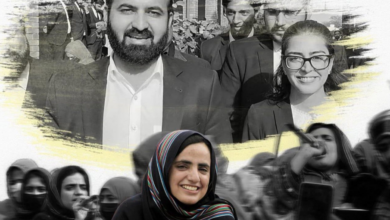
Although the number of terrorist attacks has decreased, the disappearance of young people continues. This may contribute to the prevailing silence, but it also intensifies the province’s collective trauma. With the leadership of the Baloch Yakjehti Committee (BYC) behind bars, few voices remain to protest.
Silence has become the order of the day. Still, those enforcing it remain fearfully alert to even the smallest movement. November holds symbolic significance for many non-violent nationalist groups and armed separatist networks, both inside the province and across the diaspora.
This is due to bitter memories tied to this month. In anticipation of potential violence in the capital, the Balochistan government banned all intra-provincial passenger transport, including coach and train services. It also restricted cellular and data networks across many districts. Partial suspensions were enforced in major cities, and educational institutions in the capital were closed. Measures planned for mid-month lasted until end November. Now, people worry that these steps could become routine since there is no resistance from locals, other regions, or civil society, which was once expected to support them.
What the common man says does not matter to the power corridors; the nationalist political parties have been sidelined both by the state and insurgents, and the remaining space has been captured by the BYC. The religious parties are in confusion about which side they should take, as the state’s hard-line policy in the province is difficult for them to digest. In such a scenario, one can imagine that the insurgents are the beneficiaries, and the contest is becoming one that is directly with the state, as the middle ground is disappearing fast.
Amid the prevailing chaos, the common people have not lost their composure; they still believe that the province’s problems can be resolved through peaceful means, rooted in dialogue and engagement with all stakeholders. One issue that an ordinary person readily identifies is the province’s political economy. Destabilising actors thrive along the conflict fault lines that stretch from the Afghan and Iranian borders through Sherani-Zhob and down towards the Hub district.
People know well who these spoilers are. What they struggle to understand is why state institutions fail to acknowledge them, or worse, why they continue to rely on them. Perhaps someone holds the answer, but in this season of silence, no one dares to speak aloud. Those who remain silent simply watch and hope that someone will interpret their silence and offer a remedy for the pain that has settled deep into their souls.
The writer is a security analyst. He is the Director of Pak Institute for Peace Studies (PIPS), Islamabad, Pakistan.